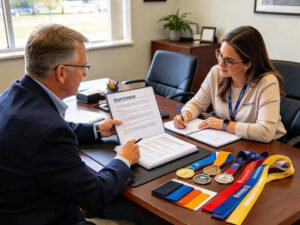
Think about the moment an athlete steps across your finish line. Sunlight flashes off the medals waiting on the awards table. Volunteers place them over tired heads, and runners instantly lift them to see their prize. But what do they really see? If the metal finish is so reflective that the date is impossible to read, or if sweaty fingers leave greasy smudges across the surface, the magic fades quickly. The surface plating of a custom medal is not just a quick coat of paint. It is the visual soul of the award that shapes how every participant remembers their accomplishment.
Studies from major sports industry groups like Correre negli Stati Uniti reveal that over 36 percent of runners consider medal quality a primary factor when choosing races. Many event directors stick with basic shiny gold, silver, and bronze simply because they have always done it that way. Yet relying only on standard shiny metal can cause glaring reflections in finisher photos and hide delicate 3D reliefs. This masterclass explores how specialty platings such as antique finishes, matte tones, black nickel, black dye, and dual-plating can transform your awards. You will discover how to match finishes to your course theme, enhance small design details, and build a unified multi-distance race system without blowing your budget. As part of our complete race medal design and sourcing roadmap, this masterclass focuses on how electroplating treatments elevate raw metal castings.
Sommario
Master Plating Comparison: Finding the Right Metal Finish
When custom medals are cast from zinc alloy or stamped from solid metal blanks, they start as dull gray or brassy pieces of raw metal. The electroplating stage changes everything. During this process, medals travel through chemical baths where electrical currents deposit thin layers of genuine metal or specialized coatings onto the surface. This bath creates the outer color, seals the base metal from moisture, and establishes the visual foundation for any enamel paint added later.
Every finish reacts differently to outdoor light, camera flashes, and sweaty hands at the finish line. Some platings reflect light like mirrors, while others absorb glare and create deep shadows. Review the technical comparison table below to see how the six primary metal finishes perform side by side across key visual and practical factors.
| Plating Style | Visual Tone | Surface Reflection | 3D Relief Visibility | Fingerprint Resistance | Miglior incontro dell'evento |
|---|---|---|---|---|---|
| High-Polish Gold / Silver | Brilliant, bright, mirror-like | Very high glare | Moderate reflection | Shows smudges easily | Traditional podium awards |
| Antique Bronze / Silver | Darkened crevices, warm patina | Zero glare | Outstanding contrast | Naturally smudge-proof | Trail runs, historic marathons |
| Matte Satin Nickel | Silvery-white, smooth satin | Soft diffused light | Clean and subtle | Good smudge resistance | Modern city races, corporate runs |
| Black Nickel (Gunmetal) | Dark gray, metallic sheen | Medium reflection | High edge contrast | Moderate resistance | Triathlons, evening night runs |
| Black Dye Metal | Solid opaque matte black | Completely flat | Bold graphic lines | Completely smudge-proof | Youth runs, colorful 5Ks |
| Dual-Plating (Gold + Silver) | Two distinct metallic tones | Varied contrast | Superior separation | Varies by surface | Major marathons, milestones |
Selecting the right plating is not just about personal taste. It is an engineering choice. The right finish ensures that small race dates are readable, sponsors are recognized, and medals look stunning when runners proudly post photos online.
Antique Plating: The Secret to Depth, Shadow, and Readability
If your race medal includes sculpted 3D landmarks, natural landscapes, elevation charts, or small typography, antique plating is the undisputed champion. In standard high-polish plating, bright overhead sunlight bounces off shiny surfaces, blinding the viewer and hiding intricate details. Antique finishes solve this problem through chemical contrast.
The manufacturing process follows three careful steps:
- Base Electroplating: Medals receive a standard coating of copper, brass, bronze, silver, or gold.
- Dark Antiquing Wash: The medals enter a specialized oxidizing bath that darkens the entire surface to a deep brown or black tone.
- Relief Buffing: Automated polishing wheels or experienced artisans lightly buff the raised areas of the medal. This strips the dark wash off the high points while preserving dark shadows inside the recessed pockets.
This process creates a built-in drop shadow effect. Raised letters, dates, and course maps jump forward visually without needing a single drop of colored enamel paint. Furthermore, antique plating naturally repels fingerprints. When volunteers hold medals by the edges and runners grip them at the finish chute, the metal remains clean and vintage without looking dirty.
| Performance Factor | Antique Metal Finishes | High-Polish Shiny Finishes |
|---|---|---|
| Outdoor Glare | Soft, matte appearance with zero sun flare | High reflection; can wash out photos |
| Small Text Legibility | Crisp, dark background makes tiny fonts easy to read | Reflective text can blend into backgrounds |
| Finish-Line Handling | Completely hides sweat, skin oil, and smudges | Shows visible fingerprints immediately |
| Thematic Connection | Evokes heritage, outdoor wilderness, and timeless effort | Evokes classic victory, Olympic tradition, and prestige |
For trail runs, wilderness ultras, and historic anniversary races, antique bronze, silver, and copper bring an authentic, rugged dignity that runners appreciate deeply.
Matte and Black Nickel: The Sleek, Modern Athletic Look
As endurance events evolve beyond traditional road races, medal aesthetics have shifted toward modern, architectural looks. Matte finishes and black nickel offer sophisticated alternatives for race organizers who want their awards to look clean, high-tech, and distinct from standard high-school track medals.
Matte plating, sometimes called satin finish, removes the mirror-like shine from gold, silver, or nickel. The metal blanks undergo light sandblasting or chemical dulling before plating. This produces a soft, velvety texture that spreads light evenly across the surface. Matte nickel is especially popular for city half-marathons and corporate running series because it feels modern and understated. However, because matte surfaces lack the deep shadows of antique plating, your artwork must feature bold, distinct relief lines to keep the design from looking flat.
Black nickel takes a different creative path. Often referred to in the sports industry as gunmetal, this finish deposits a dark, translucent metallic coating over polished metal. It is not flat black paint. Instead, it looks like dark, smoky chrome. When light strikes black nickel, it gleams with a cool, shadowy luster. This athletic edge makes black nickel a favorite for triathlons, obstacle course races, cycling events, and night runs.
When combined with jewel-toned translucent enamels, black nickel creates an effect like stained glass. The dark metallic rims frame bright colors cleanly, giving your finished award the feel of premium sports equipment.
Black Dye Metal: The High-Contrast Canvas for Colorful Awards
If your race logo features bright neon colors, playful mascots, or comic-style illustrations, traditional shiny gold or silver rims can sometimes wash out your design. Yellow gold lines placed next to bright yellow paint make borders disappear. Black dye metal solves this design challenge by creating an ultra-bold, non-reflective outline.
In this process, the medal is treated with a specialized chemical bath that turns every exposed metal ridge, rim, and edge into a solid, opaque jet black. It does not reflect sunlight, and it carries no metallic sheen. Instead, it looks like a clean vector drawing brought to life in heavy metal.
This solid black border creates dramatic contrast. When you fill the recessed cells with bright soft enamel paints, the colors explode visually. Whites look brighter, neon greens look electric, and reds command attention. Event directors organizing youth events, holiday fun runs, themed 5Ks, and music-fueled night races frequently choose black dye metal because it feels young, energetic, and visually striking.
Black dye also masks small imperfections. Because the dark coating absorbs light, tiny casting marks or uneven backgrounds blend away, leaving a smooth, uniform appearance across complex custom cutouts and unusual outer borders.
Dual-Plating: Combining Two Metal Tones on a Single Medal
Dual-plating represents the peak of electroplated medal craftsmanship. Why settle for just gold or silver when you can have both on the exact same award? By pairing two different metal tones, you create visual layers that immediately capture attention and communicate elite achievement.
The manufacturing process requires exceptional skill and patience:
- First Plating Tank: The entire metal medal is electroplated in the first base finish, such as polished silver or antique bronze.
- Manual Masking: Factory artisans use fine brushes to paint a specialized chemical-resistant lacquer by hand over the areas that must stay in the first finish.
- Second Plating Tank: The masked medal is submerged into a second chemical bath, such as polished gold. The electrical current plates gold only onto the unmasked areas.
- Resist Stripping and Cleaning: Ultrasonic solvent tanks dissolve the masking lacquer, revealing the crisp two-tone metal design beneath.
This two-tone effect allows you to separate design elements cleanly. You can plate the outer ring of your medal in antique silver and showcase your race mascot or city skyline in radiant polished gold. For multi-sport events like triathlons, you can plate the swim, bike, and run icons in distinct metallic tones across a shared medallion.
| Dual-Plating Combination | Visual Impact | Recommended Application |
|---|---|---|
| Shiny Gold + Shiny Silver | High luxury, bright contrast, Olympic feel | Major city marathons, 10th or 25th anniversaries |
| Antique Gold + Antique Silver | Subtle, vintage elegance with zero glare | Historic century runs, heritage road races |
| Shiny Gold + Black Nickel | High-tech contrast, dramatic modern style | Triathlons, evening runs, premier cycling races |
| Antique Bronze + Shiny Gold | Foreground highlight pops against rustic floor | Championship trail runs, ultra-distance awards |
Because dual-plating requires careful manual masking and two separate chemical dipping stages, it carries an additional labor charge. However, for milestone years, title events, and flagship marathons, the extraordinary perceived value far outweighs the small extra cost.
Reimagining the Classics: High-Polished Gold, Silver, and Bronze
High-polish finishes remain a beloved tradition in competitive athletics. For over a century, the Olympic standard of gold for first place, silver for second, and bronze for third has provided an instantly recognizable language of achievement. When an overall winner stands on a podium, nothing catches the light quite like polished mirror gold.
To produce this brilliant shine, raw metal pieces are machine-tumbled and buffed with jeweler’s paste before electroplating. This creates a smooth surface that reflects light like clean glass. For division winners, age-group champions, and milestone road marathons, high-polish plating provides an undeniable sense of prestige.
However, organizers must manage two practical design challenges when using high-polish finishes:
- Sun Glare in Race Photos: Wide, flat plains of mirror-polished metal reflect outdoor sunlight directly into camera lenses, washing out the race name and date in finish-line snapshots.
- Fingerprint Marks: Smooth polished metal shows finger oils and sweat immediately. Medals can look smudged before runners even leave the finish chute.
To overcome these challenges, pair high-polish raised rims with recessed sandblasted textures or colorful soft enamel fills. The textured background diffuses light, while the raised polished rims frame the artwork cleanly. This creates crisp contrast, stops camera glare, and keeps your awards looking clean throughout the medal ceremony.
Base Metals, Durability, and Weather-Safe Storage
Electroplating is only as dependable as the base metal beneath it. When you design a medal, the material you choose inside affects how well the outer plating adheres and how the award handles moisture over time. Race directors typically choose between three core metals:
- Lega di zinco: The modern industry benchmark for die-cast medals. Molten zinc fills molds smoothly, captures sharp 3D shapes, and accepts electroplating baths cleanly. Most importantly, zinc alloy contains no iron, making it completely immune to rust.
- Ferro massiccio: A budget-friendly option for stamped medals. Iron gives medals a heavy, solid heft that runners associate with quality. However, iron must be sealed with a complete plating layer. If moisture penetrates through tiny surface scratches, iron can develop rust spots.
- Ottone massiccio: The luxury standard for struck medals. Brass captures razor-sharp lettering, offers a heavy coin feel, and never rusts. However, brass costs 20% to 35% more than zinc alloy, reserving it primarily for high-end collector awards.
Proper storage before race weekend is just as critical as factory quality. Race directors often receive shipments weeks ahead of time and store boxes in outdoor storage sheds, school gyms, or damp event trailers. High humidity, condensation, and salt air at coastal races can chemically react with metal platings. Trapped moisture can cause dark spots on polished finishes or cause wet neck ribbon dyes to bleed onto metal faces.
Always store medal cartons off concrete floors in a dry, climate-controlled space. Reputable manufacturers pack each medal inside a protective polybag with small silica gel packets to absorb moisture during shipping, ensuring every medal shines brightly on race morning.
Budget Management and Plating Cost Factors
Finishing choices directly shape your final invoice. Fortunately, electroplating is one of the most flexible tools for managing event costs. Most factories treat standard polished gold, polished silver, polished bronze, and basic antique finishes as standard baseline options included in the unit price.
Specialty coatings and multi-step finishes require small surcharges. Black nickel and matte satin plating typically add 10 to 20 cents per piece due to specialized chemical tanks. Black dye coatings add 12 to 25 cents. Dual-plating carries the largest surcharge, adding 40 cents to over a dollar per medal because skilled workers must hand-paint masking resist onto every single piece.
Review the budget estimation table below to understand how plating selections and order volumes influence production costs and lead times.
| Plating Selection | Estimated Unit Surcharge | Labor & Process Complexity | Factory Production Window |
|---|---|---|---|
| Standard Polished Gold / Silver | $0.00 (Included in base price) | Standard chemical dipping & tumbling | 12-15 giorni lavorativi |
| Antique Bronze / Silver / Gold | $0.00 to $0.08 per unit | Oxidizing wash plus automated relief buffing | 12-15 giorni lavorativi |
| Matte Satin Nickel / Gold | $0.10 to $0.20 per unit | Surface sandblasting plus specialized plating | 14 to 18 business days |
| Black Nickel (Gunmetal) | $0.10 to $0.20 per unit | Specialized translucent dark nickel bath | 14 to 18 business days |
| Jet-Black Dye Coating | $0.12 to $0.25 per unit | Chemical conversion black surface coating | 14 to 18 business days |
| Dual-Plating (Two Metal Tones) | $0.40 to $1.20+ per unit | Hand-painted masking lacquer plus two dips | 18 to 22 business days |
If you manage a race weekend featuring multiple distances like a 5K, 10K, half-marathon, and full marathon, you can use the single-mold strategy. Instead of paying 100 to 150 dollars for four separate steel molds, create one unified medal design that highlights your event logo and course skyline. Then, split your order across different platings:
- Full marathoners receive polished or antique gold.
- Half-marathon finishers receive polished or antique silver.
- 10K and 5K runners receive antique bronze or black nickel.
Every distance receives an award that looks completely distinct, while your organization saves hundreds of dollars in upfront tooling costs.
Frequently Asked Questions About Medal Plating
1. Which metal plating finish is the most durable for race medals?
Antique plating is the most durable finish for race medals. Because antique finishes already feature a dark chemical patina inside the grooves and a buffed surface on the high points, they do not show surface scratches, handling smudges, or minor oxidation over time. They look just as attractive decades later as they did on race day.
2. Can you combine antique plating with colored enamel on the same medal?
Yes. Antique plating pairs wonderfully with soft enamel colors. The dark antique wash emphasizes the raised metal outlines, creating rich contrast that makes enamel colors pop cleanly. It gives the medal an authentic, handcrafted feel that runners love.
3. Why does dual-plating cost more than single plating?
Dual-plating requires extensive manual labor. After applying the first electroplated finish, factory workers must hand-paint a protective masking lacquer over specific design areas before submerging the medal into a second plating bath. This hand masking and two-stage chemical processing increase production time and labor costs.
4. Does black dye plating easily chip or peel off?
High-quality black dye finishes undergo a chemical conversion coating that bonds tightly with the underlying metal. Under normal handling and mantle display, black dye will not peel or flake. However, like any surface finish, dropping medals onto rough asphalt can scratch through the coating.
5. What is the main difference between shiny gold and antique gold medals?
Shiny gold has a bright, mirror-like, highly reflective polished surface that conveys traditional Olympic victory. Antique gold includes a dark chemical wash buffed into the recesses, giving the award a vintage appearance that eliminates camera glare and emphasizes 3D textures.
6. Can you put two different platings on a 3D sculpted medal?
Yes, but the 3D design must have clear boundaries between the two plating areas. Because workers apply masking lacquer by hand, there must be a distinct physical ridge or level change to keep the lacquer from bleeding into the neighboring section.
7. Why do trail races and ultramarathons prefer antique bronze over shiny gold?
Trail and backcountry races favor antique bronze because its earthy, natural tone reflects the rugged wilderness and grit of off-road running. Furthermore, antique bronze resists handling dirt and sweat, maintaining its vintage appeal right at the finish line.
8. Will shiny silver medals tarnish over time?
Most custom silver race medals are electroplated with nickel or simulated silver, which resists tarnishing under normal indoor display conditions. However, storing medals in humid sheds, damp event trailers, or salty coastal air can dull the shine over time. Always keep medal boxes in a dry, ventilated room.
Transforming Your Race Awards with the Perfect Finish
Every finisher medal represents countless hours of sweat, discipline, and personal courage. When you carefully select the surface plating for your awards, you elevate that achievement into something unforgettable. Whether you choose the rich shadowed depths of antique bronze, the sleek modern mystery of black nickel, the bold graphic outlines of black dye, or the two-tone luxury of dual-plating, your awards will stand out proudly in finish-line photographs and on runners’ display racks.
Smart plating decisions also protect your bottom line. By using a single casting mold across different plating finishes, you can create a unified, multi-tiered award system for 5Ks, 10Ks, half-marathons, and full marathons without paying for separate tooling fees. Your event branding stays sharp, your runners feel valued, and your budget stays completely on track.
If you are planning your upcoming race calendar and want experienced guidance on metal plating, 3D mold development, or sample proofs, our team at La fabbrica di spille economiche is here to support you. We provide expert design advice, free digital proofs, and dependable manufacturing to ensure your race medals look extraordinary on race morning.
Ready to Elevate Your Race Medals with Custom Plating?
Share your race logo, event sketches, or distance lineup with us today. Our design team will prepare a complimentary digital proof and an all-inclusive quote to make your race awards truly unforgettable.