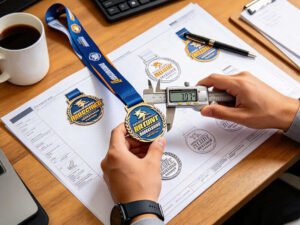
Every race director knows the feeling of reviewing event budget spreadsheets late at night. You want to deliver a memorable running experience, but city permits, timing mats, police escorts, and medical tents add up quickly. Then you open the quotation for custom finisher medals. For many races, awards represent one of the largest single supply expenses. When funds run low, organizers often panic and search for the cheapest medals possible. But cutting corners on quality is a dangerous move. These cost-saving tactics form an essential chapter in our comprehensive guide to custom race medals, helping organizers protect cash flow without cutting quality.
Athletic event organizations like the Road Runners Club of America point out that runner loyalty and year-over-year registration growth depend heavily on the post-race experience. When runners cross that finish line exhausted, a flimsy, featherweight medal feels like an afterthought. It diminishes their hard work. Yet you do not have to blow your budget to create impressive awards. By understanding factory production methods, freight logistics, and design engineering, you can trim 20 to 40 percent off your total medal invoice while giving participants a heavy, beautiful award they will proudly share on social media.
Inhaltsverzeichnis
Master Cost-Reduction Matrix: The Seven Sourcing Levers
What actually makes a race medal feel valuable to a participant? It rarely comes down to complex mechanical features or dozens of paint shades. Runners evaluate an award by three simple physical attributes: substantial weight in their hand, crisp surface contrast, and a wide, professional neck ribbon. When a medal feels heavy and looks sharp, runners assume it was expensive.
Waste happens when organizers pay for factory extras that participants barely notice. Expensive setup fees, unnecessary paint fills, individual presentation boxes, and rush air delivery drain budgets rapidly. Review the master matrix below to see how applying smart procurement choices reduces costs without hurting runner satisfaction.
| Cost-Reduction Lever | Primary Procurement Method | Estimated Savings | Impact on Runner Perception |
|---|---|---|---|
| 1. Date-Free Metal | Print dates on neck ribbons; keep metal year-free | 15% to 25% over 3 years | Zero impact; keeps awards timeless and clean |
| 2. Unified Master Mold | Use one casting mold with different platings for distances | 30% to 50% on tooling | High; builds a cohesive, branded event series |
| 3. The Four-Color Rule | Cap enamel fills at four colors; use textured metal accents | 10% to 18% on unit costs | Positive; prevents messy, cluttered visual design |
| 4. Zinc Metallurgy | Select cast zinc alloy instead of expensive brass or iron | 20% to 35% on metal base | None; zinc provides 3D relief and zero rust risk |
| 5. Thickness Over Width | Keep diameter at 2.75 to 3 inches with 3.5 mm thickness | 12% to 20% on metal weight | Positive; maintains heavy hand-feel while cutting freight |
| 6. Ocean Freight Hedging | Ship 85% base by ocean; air freight late top-ups | 15% to 30% on shipping | Zero impact; all medals arrive safely before race day |
| 7. Bulk Polybag Packing | Use protective clear polybags instead of luxury boxes | 5% to 10% on packaging | None; speeds up finish-line medal distribution |
When you combine several of these levers, the compounding financial savings are dramatic. Let us look closely at how each strategy works on the factory floor.
Lever 1: The Date-Free Metal Strategy and Mold Amortization
Every time a factory creates a custom metal award, technicians must carve a custom steel mold using computerized engraving machines. This tooling process costs between 50 and 150 dollars or more, depending on medal size and dimensional detail. If you stamp October 14, 2026 into the metal face, that steel mold becomes completely useless the moment your race wraps up.
Even worse, every leftover medal becomes instant scrap metal. If bad weather or morning schedule conflicts leave you with one hundred extra dated medals, you cannot hand them out next season. You are forced to throw away hundreds of dollars in inventory. Then, next spring, you must pay another mold fee to carve a new mold with the next year stamped on it.
Smart event planners solve this by keeping dates off the metal casting. Follow this modular approach:
- Keep Permanent Artwork on the Metal: Feature your race name, course mascot, distance, and city landmarks on the front of the medallion.
- Put Perishable Dates on the Ribbon: Print the specific race year, calendar date, and annual corporate sponsor logos on the dye-sublimated neck ribbon.
- Use Engraved Plates for Specifics: If you want to include dates or placement times on the medal body, apply a laser-engraved adhesive metal plate to a recessed pocket on the back.
Custom neckbands cost less than a dollar each. If bad weather causes lower turnout, you simply unclip the ribbons, pack the metal medallions into storage, and order fresh ribbons next year. Over three to four seasons, this single tactic saves hundreds of dollars in mold fees and completely eliminates surplus inventory waste.
Lever 2: The Unified-Mold Strategy for Multi-Distance Events
Many running festivals offer several distances on the same weekend, such as a 5K, a 10K, and a half-marathon. When first-time directors plan these events, they often design three completely different medals. That means paying for three separate steel molds. Ordering 200 half-marathon medals, 150 10K medals, and 300 5K medals results in three tiny, expensive production runs that miss out on volume discounts.
Experienced organizers use the unified-mold strategy. You carve one master mold showcasing your core event logo and course scenery. Then, you split the production run across different electroplating baths and ribbon designs to tell the distances apart:
| Ordering Approach | Mold Tooling Costs | Combined Order Volume | Average Unit Price | Total Manufacturing Cost |
|---|---|---|---|---|
| Three Separate Molds (Unique shape per race) | $360.00 ($120 x 3 distinct molds) | Fragmented batches: 200, 150, and 300 pieces | $2.80 to $3.20 per medal | $2,310.00 |
| Unified Master Mold (Shared shape, varied plating) | $120.00 (Single mold setup) | Combined batch: 650 pieces total | $1.85 to $2.10 per medal | $1,420.00 |
| Net Budget Savings | Save $240.00 (66% on tooling) | Unlocks higher quantity tier | Save ~33% per unit | Save $890.00 (38% overall) |
Half-marathoners receive antique gold, 10K runners get antique silver, and 5K finishers receive antique bronze. Matching ribbons with printed distance text clarify the division. The event looks cohesive, runners love collecting the set, and you pocket significant savings on tooling and bulk unit rates.
Lever 3: Color Engineering: The Four-Color Rule and Metal-as-Color
Adding color to medals brings logos to life, but excessive paint fills quickly increase your invoice. In medal factories, soft enamel paint is not printed by a machine; it is hand-dispensed using fine syringes into tiny metal pockets. Every extra color requires mixing custom pigments, careful hand-filling, and kiln baking. More colors mean more factory labor and a higher risk of paint bleeding.
Most manufacturers include up to four enamel colors in their baseline price. Once you add a fifth, sixth, or seventh color, factories charge a surcharge of eight to fifteen cents per medal for each additional shade. On an order of one thousand medals, adding four unnecessary colors adds up to six hundred dollars in avoidable fees.
| Number of Enamel Colors | Factory Surcharge Status | Added Cost per 500 Medals | Added Cost per 1,500 Medals |
|---|---|---|---|
| 1 to 4 Colors | Included in base unit price | $0.00 (Standard inclusion) | $0.00 (Standard inclusion) |
| 5 Colors (+1 extra) | +$0.08 to $0.15 per unit | +$40.00 to $75.00 | +$120.00 to $225.00 |
| 6 Colors (+2 extra) | +$0.16 to $0.30 per unit | +$80.00 to $150.00 | +$240.00 to $450.00 |
| 8 Colors (+4 extra) | +$0.32 to $0.60 per unit | +$160.00 to $300.00 | +$480.00 to $900.00 |
Smart designers follow the metal-as-color approach. Instead of paying for white paint in the sky or gray enamel on roads, use the bare metal to create contrast. You can specify sandblasted matte backgrounds, dark antique washes in the lettering, and polished shiny highlights on raised borders. This creates clean, three-dimensional depth without adding a single penny in color surcharges.
Lever 4: Metallurgy Selection: Choosing Zinc Alloy Over Brass and Iron
The raw metal selected for your awards shapes manufacturing complexity and long-term durability. Some race directors believe that solid brass is required for a medal to feel prestigious. While brass is dense and traditional, copper commodity prices make it expensive. Solid brass typically costs 20% to 35% more than zinc alloy.
At the opposite end sits stamped iron. Iron is cheap and heavy, but it has severe design limits. Because iron is stamped cold from sheet metal under hydraulic pressure, it cannot create smooth 3D curves, sculpted human faces, or internal cutouts without costly secondary punch tooling. Furthermore, iron contains ferrite. If the electroplated finish is scratched or exposed to damp morning air, iron medals can develop rust spots during storage.
| Base Metal Type | Relative Kosten | 3D Relief & Ausschnitte | Corrosion Protection | Empfohlene Anwendung |
|---|---|---|---|---|
| Cast Zinc Alloy | Baseline standard (Affordable) | Full 3D curves and free cutouts | 100% Rust-proof (No iron content) | Road marathons, 5Ks, multi-sport |
| Stamped Solid Iron | 10% to 15% cheaper base | Flat 2D only; no interior cutouts | Prone to rust if plating scratches | Budget military runs, flat medals |
| Stamped Solid Brass | 20% to 35% more expensive | Crisp 2D lines; no deep curves | 100% Rust-proof copper alloy | Centennial events, elite honors |
| Laser-Cut Acrylic | Economical for small orders | Flat printed outlines only | Completely weatherproof polymer | Kids dashes, youth runs, fast rush |
Cast zinc alloy is the sweet spot of modern medal production. Zinc alloy melts at a manageable temperature and flows smoothly into molds, allowing you to create custom outlines and deep 3D terrain maps without extra fees. It feels pleasantly heavy in hand, takes electroplating baths beautifully, and never rusts.
Lever 5: Sizing and Thickness Optimization: The Sturdy Sweet Spot
There is a widespread misconception that bigger is always better. First-time race organizers often request huge medals measuring 3.5 to 4.5 inches across, assuming runners will be amazed. However, making a medal wider increases the surface area exponentially. A 4-inch medal requires almost double the raw molten metal of a 3-inch medal, which drives up production costs and air freight fees.
To keep costs down on oversized medals, suppliers are often forced to stamp them thin, around 2.0 to 2.5 millimeters thick. The result is disappointing: an oversized medal that feels light, tinny, and sharp around the edges. It bends easily and clangs like cheap sheet metal.
The secret to high perceived value is edge thickness. When runners pick up a medal, their fingers grip the rim. A medal that is 2.75 to 3.0 inches wide with a sturdy 3.5 to 4.0 millimeter profile feels dense, cool, and substantial. By trimming half an inch from the diameter and putting that metal into thickness, you reduce overall alloy volume by 20 to 25 percent while creating an award that feels far more prestigious.
Lever 6: Logistics Hedging: Bulk Ocean Freight vs Air Express
Metal medals are heavy products. A shipment of one thousand standard medals with ribbons weighs between 180 and 240 pounds. If you finalize your medal design late, you have no choice but to ship those heavy boxes via international air express. Air shipping typically adds $1.00 to $1.50 or more per medal in transit surcharges alone, wiping out your registration profits.
Ocean freight is dramatically cheaper, typically costing around $0.15 to $0.20 per medal. The only requirement is time: cargo ships take four to six weeks to cross the ocean and clear customs. Groups like the Council for Responsible Sport advocate for advance planning because ocean transport also significantly reduces the carbon footprint of event merchandise.
To protect your budget while handling late sign-up surges, use a hybrid shipping model:
| Logistics Sourcing Model | Base Shipment (Ocean) | Surge Batch (Air) | Total Delivery Bill | Freight Cost per Runner |
|---|---|---|---|---|
| All-Air Delivery (Last-minute) | 0 Medaillen | 1,000 medals via Air | $1,350.00 | $1.35 per medal |
| All-Ocean Cargo (Early planning) | 1,000 medals via Sea | 0 Medaillen | $160.00 | $0.16 per medal |
| Hybrid Logistics Model | 850 medals via Sea | 150 medals via Air | $338.50 | $0.34 per medal |
| Net Savings (Hybrid vs All-Air) | — | — | Save $1,011.50 | Save $1.01 per runner (75% drop) |
By locking in your base participant order twelve weeks ahead of race day, you ship 85% of your inventory at rock-bottom ocean rates. If registrations spike during the final month, order a quick top-up batch sent by air. You keep freight expenses low while ensuring every runner receives their award.
Lever 7: Bulk Packaging and Negotiating Value-Added Terms
Presentation packaging looks charming in catalogs, but it causes logistical headaches at the finish line. Velvet-lined presentation cases, acrylic display boxes, and printed cardboard backing cards add anywhere from $0.80 to $2.50 to the cost of every medal. They also double carton volume, driving up freight fees.
Think about race day reality. When runners cross the line gasping for breath, volunteers do not hand them a boxed gift set. Medals must be draped around necks in seconds to prevent dangerous bottlenecks in the chute. Expensive presentation boxes end up discarded on grass or tossed into recycling bins. Standard protective polybags prevent metal scratching during shipping at zero extra cost, allowing volunteers to unpack and stage awards quickly.
You can also capture savings by negotiating value-added services with your supplier:
- Free Digital Proofs and Revisions: Avoid paying independent graphic artists by partnering with manufacturers that provide complimentary digital vector mockups and unlimited revisions.
- Free Dye-Sublimated Neck Ribbons: Ensure your quotation includes full-color, dye-sublimated neck ribbons sewn directly to the medals, rather than paying extra for ribbon assembly.
- Waived Setup Charges: Ask suppliers if mold fees can be waived or discounted when your order crosses volume thresholds or when committing to recurring annual orders.
Frequently Asked Questions About Saving Money on Race Medals
1. How much does a custom race medal typically cost?
For orders of 500 to 1,000 pieces, custom die-cast metal medals typically cost between $1.50 and $3.50 each, including a full-color sublimated neck ribbon. Very complex designs with moving parts or multiple pieces can reach $5.00 to $8.00, while orders under 100 pieces cost more due to fixed mold charges.
2. What makes a race medal feel cheap to participants?
A medal feels cheap when it is thin (under 2.5 mm), hollow on the back, lightweight, or attached to a narrow, plain stock ribbon. Runners equate quality with weight and solid edge thickness. Maintaining a 3.5 mm thickness ensures an award feels valuable, even at a modest 2.75-inch diameter.
3. Can small races with under 100 runners save money on custom medals?
Yes. Races with under 100 runners can use custom-printed insert medals or laser-cut acrylic awards. Both formats eliminate mold fees completely, saving $50 to $150 in setup expenses while offering full-color branding with fast production turnaround.
4. Does soft enamel look worse than hard enamel?
No, soft enamel simply has a different look and feel. Soft enamel settles into metal pockets, leaving raised metal rims you can touch. Many runners prefer soft enamel because it offers rich tactile texture and works on curved 3D surfaces, all while costing 20% to 40% less than polished hard enamel.
5. How can we reuse leftover medals if our race date is stamped on them?
If dates are stamped directly into the metal mold, leftover medals cannot be reused for future events. This is why experienced race directors leave dates off the metal and print them on the neck ribbon instead. Reusing metal medallions with new ribbons eliminates waste.
6. What is the standard minimum order quantity for custom metal medals?
Most medal manufacturers set their minimum order quantity at 100 pieces for fully custom die-cast medals. If you order fewer than 100 units, the fixed mold fee gets spread over fewer medals, driving up your per-unit cost significantly.
7. How far in advance must I order to get cheap ocean shipping?
You should approve your final artwork and place your order at least 10 to 12 weeks before race day. Factory production takes three to four weeks, and ocean cargo takes four to six weeks to sail, clear customs, and arrive at your door.
8. Are neck ribbons included in the medal price?
With reputable suppliers, standard full-color dye-sublimated neck ribbons are included in the base unit quote. Always confirm that your quotation covers ribbon printing, sewing, and assembly so you do not face surprise finishing charges.
Maximizing Event Value Without Draining Your Budget
Every finisher medal represents discipline, personal courage, and early morning miles. When runners cross your finish line, that medal is the physical reward for their hard work. You do not have to drain your event reserves or order flimsy awards to stay on budget. By leaving dates off the metal, unifying multi-distance molds, sticking to the four-color rule, choosing zinc alloy, and planning early for ocean shipping, you can trim 20 to 40 percent off your manufacturing costs.
Smart sourcing allows you to put more money toward course safety, post-race refreshments, and charity fundraising while delivering an award that participants treasure. When medals look sharp and feel substantial, runners post photos online, talk about your event with their running clubs, and sign up again next season.
If you are planning your upcoming race calendar and want seasoned guidance on medal engineering, mold consolidation, or cost-saving strategies, our team at Die billige Reversnadelfabrik is here to help. We offer free digital design proofs, transparent pricing, and reliable delivery to help you create unforgettable awards that fit your budget perfectly.
Ready to Save on Your Next Race Medal Order?
Share your race logo, estimated runner counts, and design ideas with us today. Our design team will prepare a complimentary digital proof and an all-inclusive quote to help you maximize your event budget.