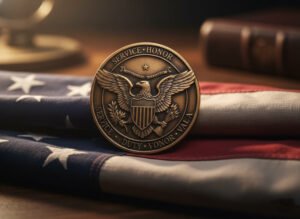
Hai mai tenuto un pezzo di storia nel palmo della tua mano? C'è un peso distinto e soddisfacente per a moneta di sfida. Sembra sostanziale, permanente e significativo. È più di un semplice pezzo di metallo stampato; è una storia. Rappresenta un legame tra soldati, una pietra miliare per un'azienda o il ricordo di un risultato di una vita.
La tradizione di queste monete risale alla prima guerra mondiale, dove venivano utilizzate per identificare i soldati e costruire la coesione delle unità. Oggi, quella tradizione è esplosa oltre i confini militari. Dalle sale riunioni aziendali che riconoscono i migliori team di vendita alle organizzazioni no-profit che ringraziano i donatori, e persino ai club sociali che celebrano anniversari, le monete sfida sono diventate il gold standard per il riconoscimento.
Tuttavia, se non ne hai mai progettato uno prima, il processo può sembrare travolgente. Che metallo dovresti usare? Quanto dovrebbe essere grande? Qual è la differenza tra smalto morbido e duro? Non preoccuparti. Questa guida è la tua tabella di marcia. Ti guideremo attraverso ogni singolo aspetto del processo di progettazione, dallo schizzo iniziale su un tovagliolo al momento in cui le monete finite arrivano a casa tua. Alla fine di questo articolo avrai le conoscenze necessarie per creare un capolavoro che sarà apprezzato per decenni.
Capitolo 1: Comprendere lo scopo e il pubblico

Qual è lo scopo di una moneta sfida?
Prima di scegliere colori o metalli, devi definirli “Perché.” Una moneta sfida è uno strumento e il suo design dovrebbe riflettere la sua funzione. Generalmente, queste monete hanno uno dei cinque scopi principali:
- Riconoscimento: Questo è forse l'uso più comune. Un comandante o un amministratore delegato consegna una moneta a un subordinato per dirlo “Lavoro ben fatto.” È un premio immediato e tangibile che ha più peso di un certificato cartaceo.
- Appartenenza & Identità: Le monete vengono spesso utilizzate per dimostrare la tua appartenenza a un gruppo, squadra o club specifico. Portare la moneta è un segno di orgoglio ed esclusività.
- Cameratismo & Morale: Negli ambienti militari e di primo soccorso, il “Controllo delle monete” è una tradizione leggendaria. Se sei in un bar e qualcuno sbatte la sua moneta sul tavolo, devi produrre la tua. Se non puoi, stai comprando il prossimo giro di drink. Ciò crea un legame divertente e competitivo tra i membri.
- Commemorazione: Le monete sono perfette per congelare un momento nel tempo. Sono spesso coniati per eventi specifici come matrimoni, riunioni, memoriali o anniversari significativi (come il centenario di un'azienda).
- Marketing: Pensa a “Moneta del biglietto da visita.” A differenza di una tessera di carta che viene gettata nella spazzatura, una moneta di metallo pesante con il tuo logo e le informazioni di contatto viene conservata su una scrivania per anni. È uno strumento di marketing ad alto impatto.
Chi è il pubblico target?
Le tue scelte progettuali devono essere in linea con la persona che riceve la moneta. Se stai progettando per a
unità militare o un dipartimento di polizia, spesso si preferiscono stili tradizionali con finiture anticate, bordi in corda e simboli araldici. Trasmettono storia e serietà.
D'altra parte, se il tuo pubblico è a
startup tecnologica moderna o un clan di giocatori, potresti desiderare un'elegante finitura in nichel nero lucido con smalto brillante e fosforescente. Comprendere il destinatario garantisce che la moneta risuoni emotivamente con lui.
Capitolo 2: Gli elementi fondamentali della progettazione (gli elementi costitutivi)
Come scegliere la dimensione giusta per una moneta sfida?
Le dimensioni contano. Determina quanti dettagli puoi includere e come si sente la moneta in tasca.
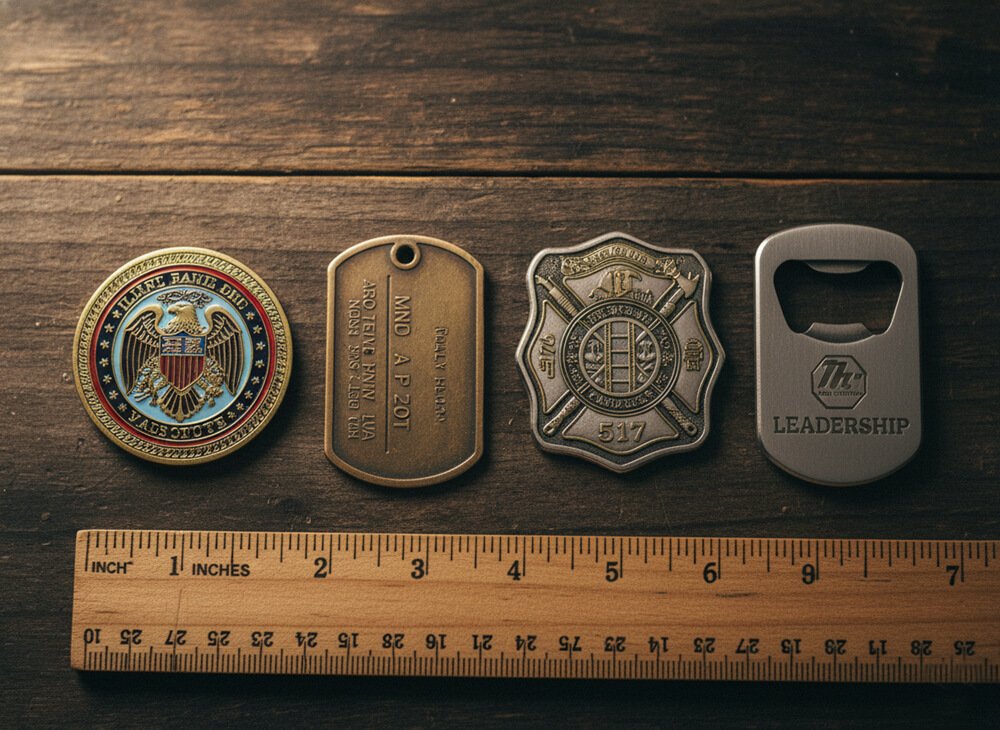
- Misura standard (1,75,0″ – 2″): Questo è il punto debole del settore. Una moneta da 1,75 o 2 pollici ha all'incirca le dimensioni di una pallina da golf. È abbastanza grande da mostrare loghi e testi dettagliati, ma abbastanza piccolo da stare comodamente in una tasca o in un portafoglio.
- Piccole monete (1.5″): Questi sono più compatti e leggeri. Attenzione però alla leggibilità. Se hai un logo complesso o molto testo, una tela da 1,5 pollici potrebbe essere troppo affollata.
- Monete di grandi dimensioni (2.5″ – 9″): Sì, puoi fare le cose in grande. Abbiamo visto monete grandi fino a 9 pollici e pesanti più di tre libbre! Le monete da 2,5 pollici o più vengono generalmente utilizzate come “Monete del comandante” o esporre pezzi per scrivanie, piuttosto che da portare in tasca.
Quali sono le forme migliori per le monete personalizzate?
Sebbene il cerchio sia classico, non sei limitato ad esso. La produzione moderna consente un'incredibile creatività nella forma.
- Turno tradizionale: La scelta senza tempo. È facile da progettare e si adatta a tutte le vetrine standard.
- Forme geometriche: Quadrati, ovali, ottagoni e triangoli sono alternative popolari che offrono comunque una buona superficie per il design.
- Taglio su misura personalizzato: Vuoi una moneta a forma di aereo da caccia, uno stato, la testa di una mascotte o il logo di un'azienda? Possiamo creare fustelle personalizzate che tagliano il metallo seguendo il contorno esatto del tuo disegno.
- Forme funzionali: Perché non rendere utile la moneta? Possiamo integrare ganci apribottiglie, punte di cacciaviti o funzionalità multiutensile direttamente nella forma della moneta.
Quanto dovrebbe essere spessa una moneta sfida?
Lo spessore della moneta contribuisce in modo significativo alla sua “valore percepito.” Una moneta sottile sembra economica, come un gettone di una sala giochi. Una moneta spessa sembra un tesoro.
- Standard (3 mm): Questa è l'impostazione predefinita per la maggior parte delle monete. Fornisce una sensazione solida e di qualità.
- Premium (3,5 mm – 5 mm): Aumentare lo spessore a 4 mm o addirittura 5 mm aggiunge un peso sostanziale. Le monete più pesanti sono psicologicamente associate a valore e prestigio più elevati. Se il tuo budget lo consente, aggiungere spessore è uno dei modi più semplici per migliorare l’impatto della tua moneta.
| Attributo |
Raccomandazione standard |
Miglior caso d'uso |
| Misurare |
1,75 pollici – 2 pollici |
Sta in tasca, buona visibilità dei dettagli. |
| Forma |
Girare |
Tradizionale, si adatta alle custodie standard. |
| Spessore |
3 mm |
Sensazione solida, conveniente. |
Capitolo 3: Materiale, placcatura e finiture
Qual è il miglior metallo per le monete sfida?
Il materiale di base è la tela della tua arte. I materiali più comunemente utilizzati sono:
- Ottone: Questa è la scelta premium. L'ottone è una lega pesante e densa di rame e zinco. Consente dettagli incredibilmente nitidi e rilievi 3D. Se vuoi una moneta pesante e di qualità da gioielleria, l'ottone è la strada da percorrere.
- Lega di zinco: Questa è un'alternativa versatile ed economica. È più leggero dell'ottone ma funziona eccezionalmente bene per le monete che necessitano di ritagli o forme personalizzate uniche. Il processo di fusione della lega di zinco è flessibile e preciso.
- Ferro: Spesso utilizzato per progetti a basso costo. Un vantaggio unico del ferro è che è magnetico, il che lo rende la scelta perfetta per i pennarelli per palline da golf che si attaccano alle clip magnetiche per cappelli.
Quale opzione di placcatura dovrei scegliere?
Una volta che il metallo di base viene colpito o fuso, viene placcato. Questo definisce il colore e il carattere delle parti metalliche della tua moneta.
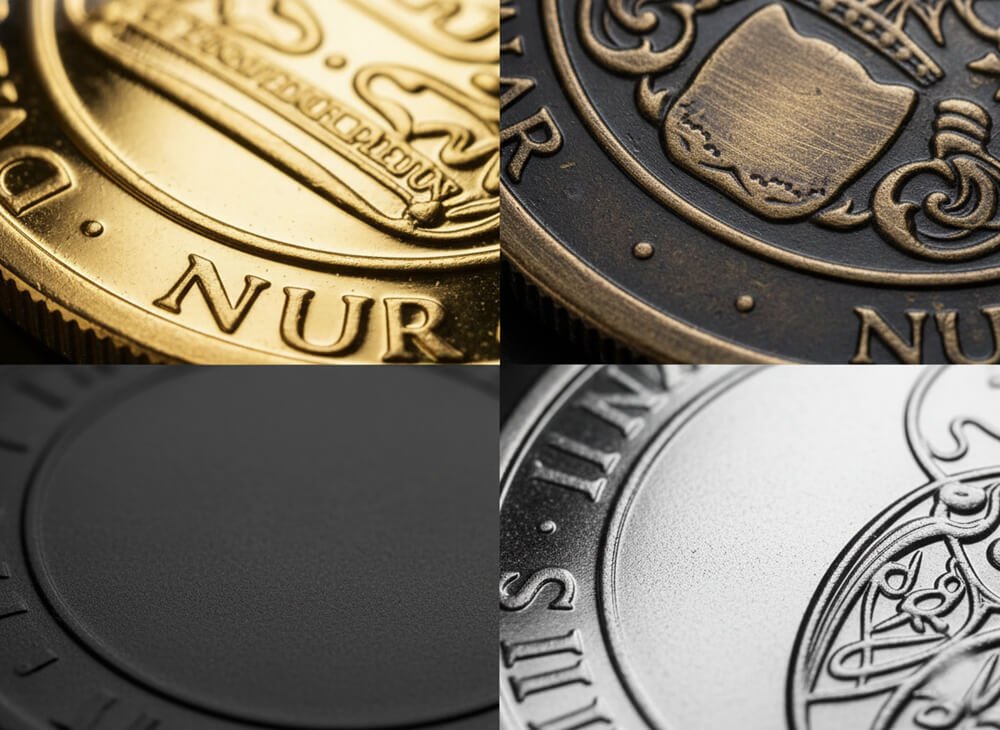
1. Alto polacco (lucido): Disponibile in oro, argento, nichel e rame. Queste finiture sono altamente riflettenti e simili a specchi. Sembrano regali e costosi. Lo svantaggio è che a volte possono essere difficili da leggere in condizioni di luce intensa a causa dell'abbagliamento e mostrano facilmente le impronte digitali.
2. Antico (opaco/invecchiato): Disponibile in oro antico, argento, bronzo e rame. Per ottenere ciò, la moneta viene placcata e poi lavata con un lavaggio nero antico. La sfumatura scura si deposita nelle aree incassate, creando un forte contrasto con il metallo in rilievo. Questo è il
la migliore opzione per la leggibilità, soprattutto per disegni ricchi di testo o rilievi 3D.
3. Metallo nero/nichel nero: Una finitura elegante e moderna. Sembra canna di fucile scuro. Se abbinato a colori smaltati brillanti, il contrasto è sorprendente. È molto popolare nelle comunità tattiche e di gioco.
4. Doppia placcatura: Perché sceglierne uno? Possiamo placcare metà della moneta in oro e metà in argento. Questo effetto bicolore è sofisticato e accattivante, spesso utilizzato per evidenziare loghi specifici.
Capitolo 4: Opzioni di colore e smalto
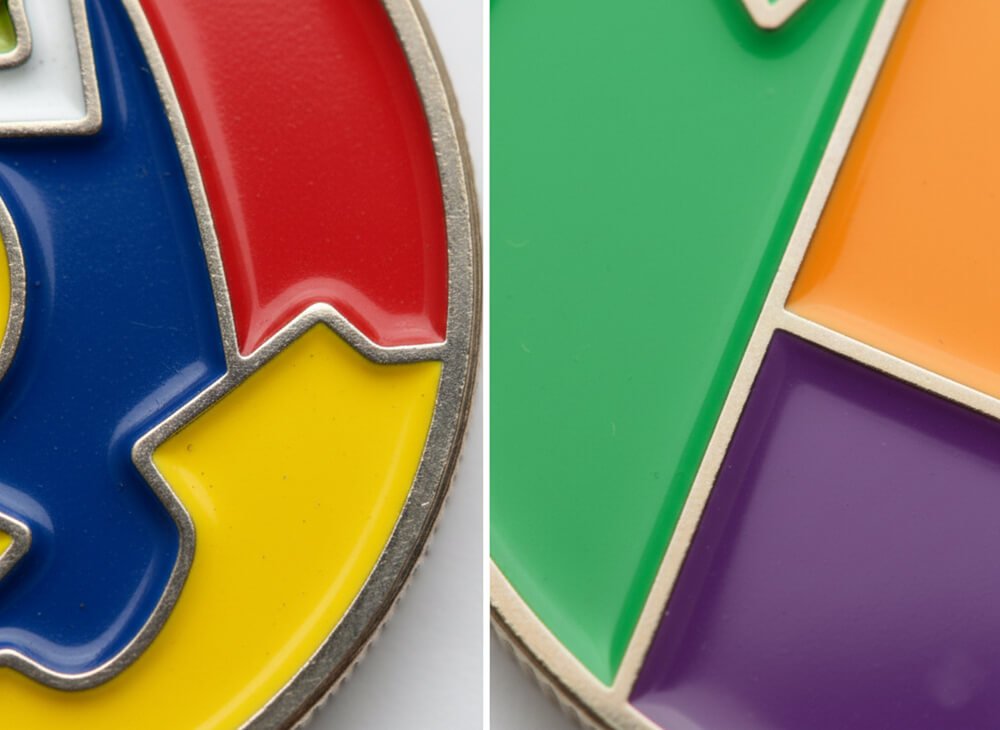
Smalto morbido vs smalto duro: qual è il migliore?
Questa è la domanda più comune che riceviamo. Nemmeno lo è “Meglio,” ma offrono aspetti e sensazioni molto diversi.
Smalto morbido: In questo processo, lo smalto colorato viene depositato nelle aree rientranti della moneta. Si trova più in basso rispetto alle pareti metalliche rialzate. Quando passi il pollice sulla moneta, puoi sentire il “dossi” e creste del disegno. Questo crea un aspetto dimensionale e strutturato che molte persone amano. In genere è anche più conveniente.
Smalto Duro (stile Cloisonné): Qui lo smalto viene sovrariempito e poi lucidato fino a quando non risulta perfettamente a filo con le linee metalliche. La superficie diventa liscia e piatta, come il vetro. Questo crea una finitura di fascia alta, di qualità da gioielleria. È estremamente durevole e resistente ai graffi.
Senza smalto (tutto in metallo): Non è necessario usare il colore. Alcune delle monete più eleganti si basano interamente sul metallo. Usiamo la sabbiatura sullo sfondo per creare una texture opaca, che fa risaltare il metallo in rilievo lucido. Questo è elegante e senza tempo.
| Caratteristica |
Smalto morbido |
Smalto duro |
| Struttura della superficie |
Sensazione strutturata/3D |
Liscio/piatto |
| Durabilità |
Alto |
Molto alto (resistente ai graffi) |
| Costo |
Conveniente |
Prezzo premium |
| Aspetto |
Dimensionale |
Come gioielli |
Opzioni di colore speciali
Vuoi far risaltare ancora di più il tuo design? Considera questi aggiornamenti:
- Smalto traslucido: Un colore trasparente viene applicato su uno sfondo metallico strutturato. Sembra vetro gemma colorato.
- Si illumina al buio: Nello smalto vengono miscelate polveri speciali. Sembra bianco latte alla luce del giorno ma brilla di verde al buio.
- Smalto glitterato: Alla vernice vengono aggiunte scaglie metalliche per un effetto scintillante.
- Corrispondenza Pantone: Utilizziamo il Pantone Matching System (PMS) per garantire che i colori del tuo marchio siano rispettati esattamente. Se il tuo logo è “Rosso Coca Cola,” abbiniamo quel codice specifico.
Capitolo 5: Personalizzazione avanzata (bordi, 3D e texture)
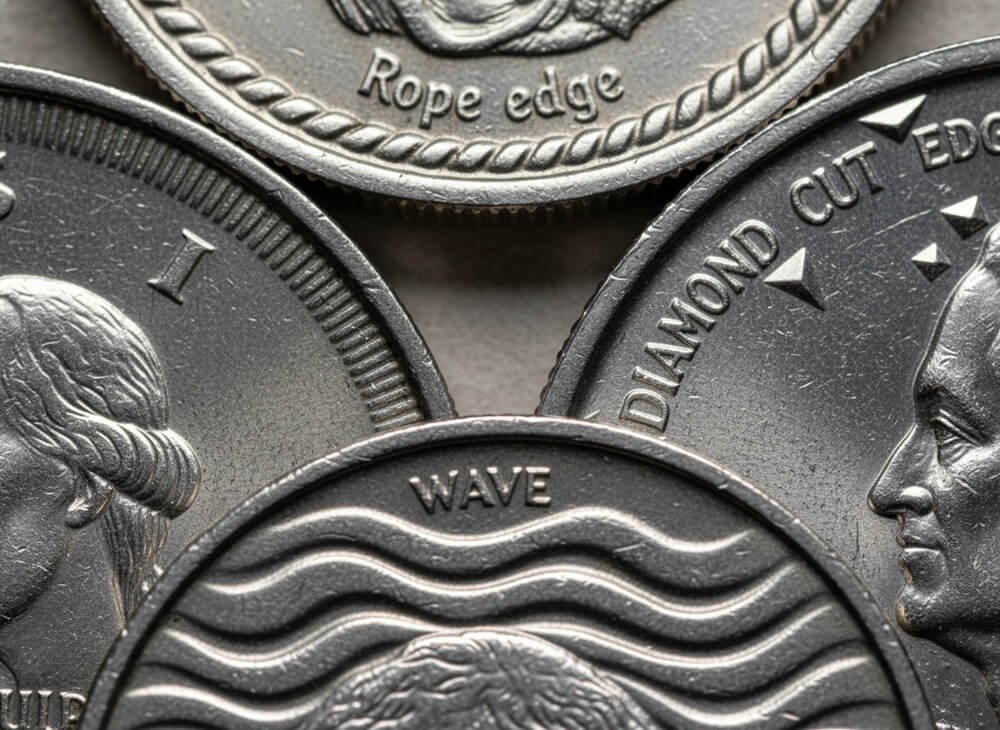
Quali sono le diverse opzioni del bordo della moneta Challenge?
Il bordo della tua moneta è come la cornice di un dipinto. Un bordo piatto standard va bene, ma il miglioramento del bordo può cambiare drasticamente l'estetica.
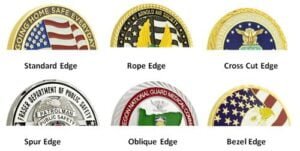
- Taglio della corda: Sembra una corda nautica attorcigliata. Essenziale per le monete della Marina, della Guardia Costiera o della Marina.
- Taglio diamante/croce: Sul bordo sono realizzati tagli sfaccettati che riflettono la luce come un diamante. Questo attira immediatamente l'attenzione sulla moneta.
- Onda / Capesante / Petalo: Si tratta di bordi curvi e decorativi che conferiscono alla moneta una silhouette più morbida e decorata.
- Bordo zigrinato: Scanalature verticali, esattamente come il bordo di un quarto o di una monetina.
- Obliquo / Sperone: Tagli aggressivi e spigolosi che donano un tocco moderno e dinamico.
- Bordo inciso: Se esaurisci lo spazio sulla faccia della moneta, possiamo incidere del testo (come un motto o una data) direttamente sul bordo del bordo.
Progettazione 2D e progettazione 3D: quando utilizzare quale?
Progettazione 2D: Questo utilizza due livelli: metallo rialzato e metallo incassato. È perfetto per loghi, testo e illustrazioni vettoriali puliti. Offre linee nitide e nitide.
Progettazione 3D: Ciò comporta scolpire il metallo con infiniti livelli di rilievo. È necessario se vuoi rappresentare il volto di una persona, una mascotte, una statua o un paesaggio (come una catena montuosa). Permette curve arrotondate e profondità realistica.
Capitolo 6: Progettare l'opera d'arte (il processo creativo)
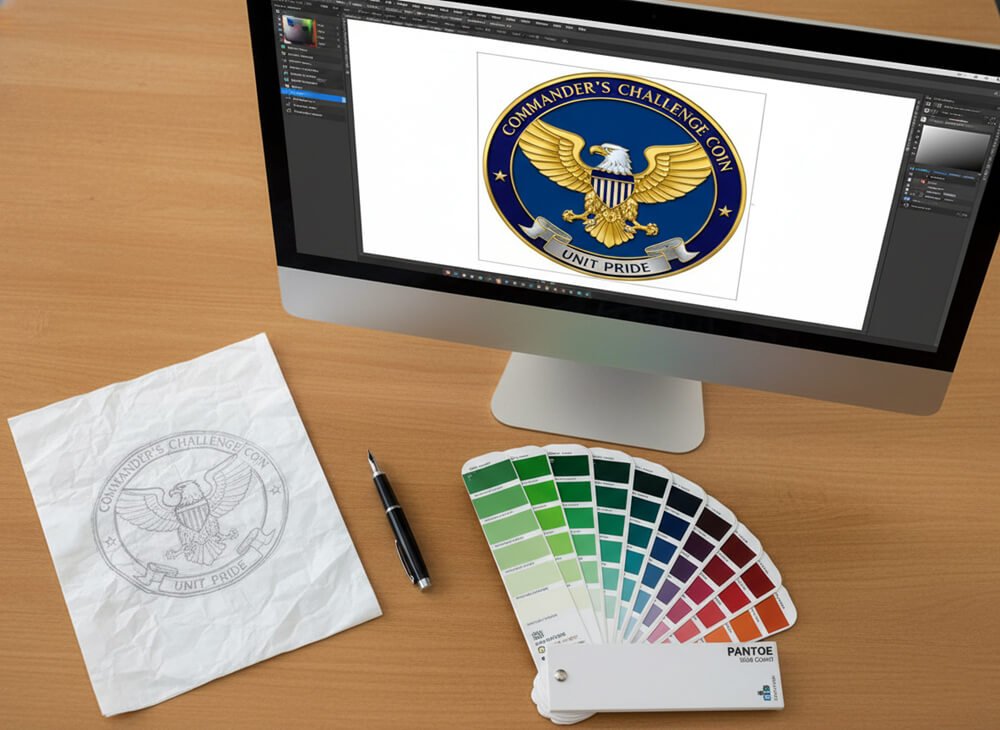
Come creare un disegno senza essere un artista?
Ecco un segreto: non è necessario essere un grafico. La maggior parte dei produttori fornisce servizi di grafica gratuiti. Abbiamo solo bisogno di un punto di partenza.
- Lo schizzo del tovagliolo: Figure stilizzate e scarabocchi grezzi vanno assolutamente bene. I nostri artisti interpretano le tue istruzioni di layout.
- Modelli: Offriamo modelli scaricabili che ti consentono di disegnare all'interno di un cerchio per visualizzare la spaziatura.
- Immagini: Raccogli immagini da Google, Pinterest o dai tuoi file. Inviaci loghi, mascotte o foto delle attrezzature che desideri mettere in evidenza.
Creazione di un brief di progettazione (guida passo passo)
Per ottenere la moneta perfetta al primo tentativo, copia e incolla questo modello nella tua email. Compila gli spazi vuoti per creare un brief di progettazione cristallino:
Modello di brief di progettazione:
“Vorrei ordinare [Quantità] monete.”
“Voglio che la forma della moneta sia [Cerchio / Personalizzato / Scudo].”
“Voglio che la taglia sia [1,75 pollici/2 pollici].”
“Voglio che la finitura in metallo lo sia [Oro antico / Argento lucido / Nichel nero].”
“Sul FRONTALE utilizzare il logo allegato. Voglio il testo "[Inserisci testo qui]’ lungo il bordo superiore.”
“Sul RETRO, crea un'immagine 3D di [Foto allegata].”
“Vorrei un [Corda/Diamante] bordo.”
Capitolo 7: Evitare errori comuni di progettazione
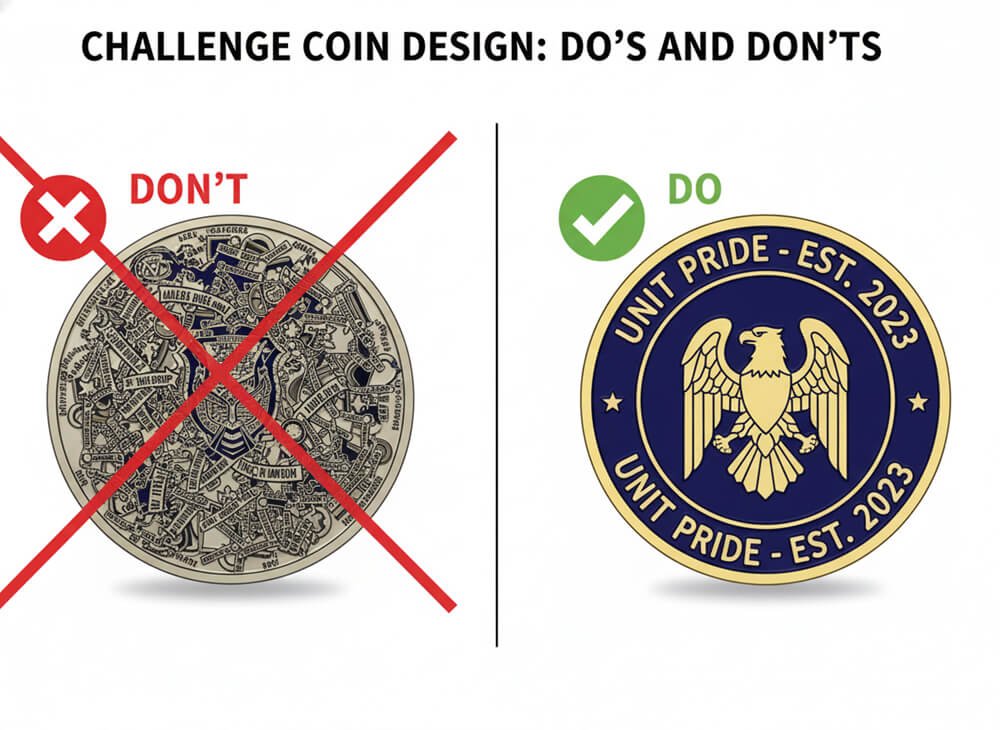
Quali sono gli errori più comuni nella progettazione delle monete sfida?
Vogliamo che la tua moneta sia perfetta. Evita queste trappole:
- Scarsa leggibilità: Non provare a stipare un romanzo su una moneta da 2 pollici. Mantieni il testo breve e incisivo. Assicurati che le dimensioni dei caratteri siano sufficientemente grandi da poter essere lette senza una lente di ingrandimento.
- Scontro di colori: Fai attenzione con lo smalto scuro su metallo scuro (come blu navy su nichel nero). Diventa invisibile. Usa colori contrastanti o contorni metallici per separarli.
- Eccessivo metallo prezioso: Non hai sempre bisogno dell'oro. A volte una finitura in bronzo antico si adatta meglio a un tema storico e costa meno. Abbina il metallo al messaggio.
- Ignorare la dimostrazione: Quando ti invieremo la prova della grafica digitale, guardala attentamente! Controlla l'ortografia, le date e i colori. Questa è l'ultima possibilità di correggere gli errori prima che il metallo venga tagliato.
- Ingombrare: “Meno è meglio.” Un design pulito e audace di solito sembra più professionale di uno ingombro di piccoli dettagli.
Capitolo 8: Il processo di produzione e ordinazione
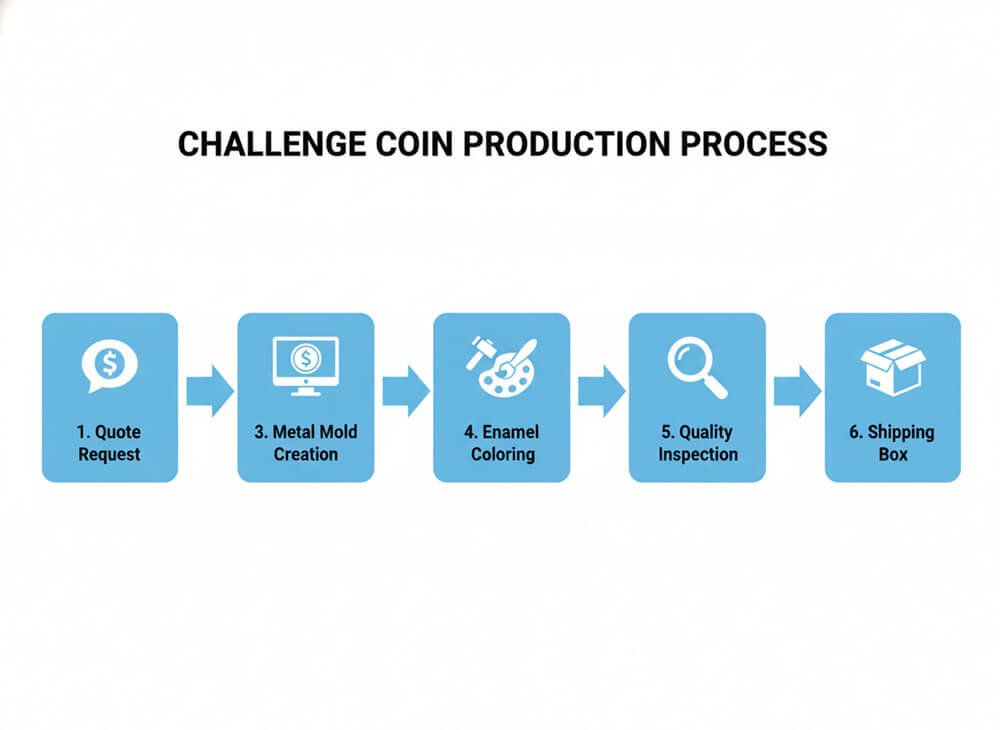
Come ordinare monete sfida personalizzate?
Il procedimento è più semplice di quanto si possa pensare:
- Passaggio 1: preventivo & Opera d'arte: Inviaci la tua idea/brief. Forniamo un preventivo e una prova d'arte digitale in pochi giorni.
- Passaggio 2: correzione: Tu rivedi l'art. Puoi richiedere revisioni illimitate finché non sarà perfetto.
- Passaggio 3: stampo & Conio: Una volta approvato, tagliamo una fustella in acciaio (stampo) del tuo disegno. Quindi stampiamo o fondiamo le monete metalliche.
- Passaggio 4: colorazione & Lucidatura: Gli artigiani riempiono a mano i colori a smalto e cuociono le monete per polimerizzarle. Vengono poi lucidati a specchio.
- Passaggio 5: controllo di qualità & Spedizione: Ispezioniamo ogni moneta per individuare eventuali difetti, le imballiamo e te le spediamo.
Quanto tempo ci vuole?
In generale, la produzione richiede
2-4 settimane dopo aver approvato l'opera d'arte. Se hai una scadenza specifica per un evento, faccelo sapere immediatamente: spesso sono disponibili opzioni urgenti.
Capitolo 9: Packaging e presentazione
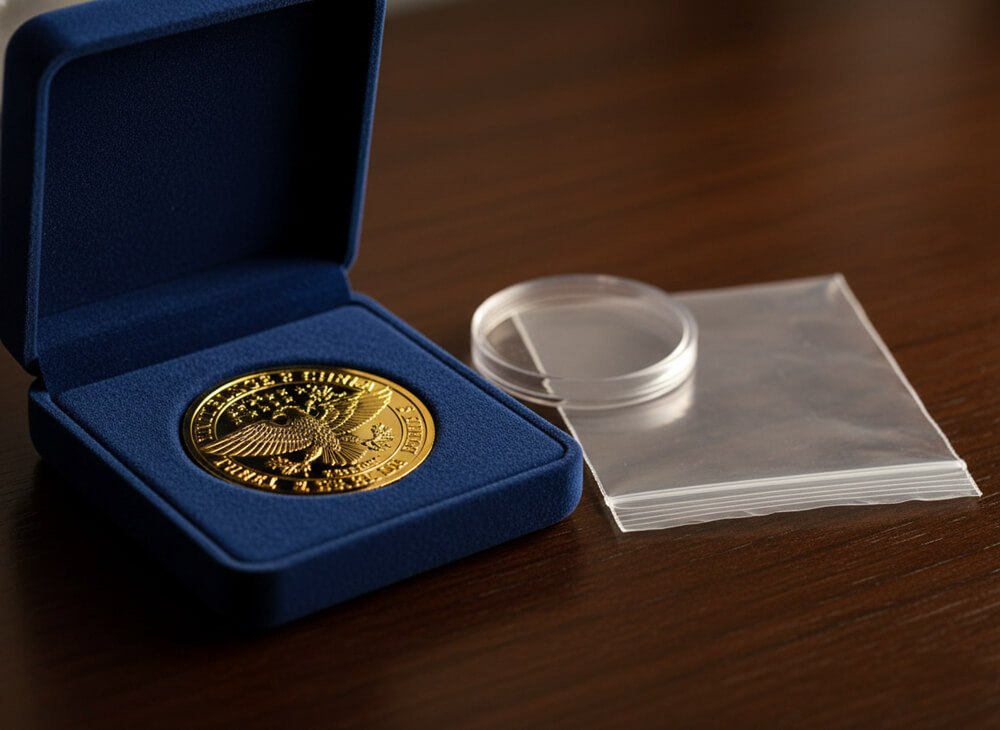
Quali sono i modi migliori per esporre le monete sfida?
Non gettare una bella moneta in una scatola di cartone. La presentazione aggiunge valore.
- Custodia in PVC standard: Questa busta di plastica trasparente è solitamente gratuita e protegge la moneta dai graffi durante la spedizione.
- Borse in velluto & Scatole: Una borsa in velluto nero o blu aggiunge un tocco di classe. Una scatola di presentazione in velluto è l'aggiornamento definitivo per le cerimonie di premiazione.
- Capsule acriliche: Questi gusci di plastica dura sono ermetici e proteggono la moneta da impronte digitali e polvere, perfetti per i collezionisti.
- Supporti per monete: Semplici supporti in plastica o legno consentono al destinatario di esporre la moneta sulla scrivania o sullo scaffale.
Domande frequenti (FAQ)
1. Posso utilizzare una fotografia su una moneta sfida?
SÌ! Mentre lo smalto tradizionale utilizza colori solidi, possiamo utilizzare un processo chiamato
Stampa offset. Ciò ci consente di stampare una fotografia ad alta risoluzione direttamente sul metallo, che viene poi ricoperto con una cupola epossidica trasparente per protezione.
2. Qual è la differenza tra una moneta e un medaglione?
Tecnicamente sono fatti allo stesso modo. “Sfida le monete” sono generalmente più piccoli (1.5″ – 2″) e destinato ad essere trasportato. “Medaglioni” O “Medaglie” sono spesso più grandi o hanno un anello/nastro attaccato per essere indossati intorno al collo.
3. Devo pagare lo stampo?
Sì, in genere c'è una sola volta “tariffa per lo stampo” O “tassa di morte” per creare il timbro in acciaio per il tuo design specifico. Tuttavia, se riordini lo stesso disegno in un secondo momento, di solito non dovrai pagare nuovamente questa tariffa poiché conserviamo lo stampo in archivio.
4. Posso creare una moneta con un buco al centro?
Assolutamente. I ritagli personalizzati sono una caratteristica di design molto popolare. Possiamo ritagliare aree interne per creare spazi aperti, o anche forme che funzionino come apribottiglie.
5. Cos'è la numerazione sequenziale?
Qui è dove incidiamo un numero univoco su ciascuna moneta (ad esempio, #001, #002, #003). Questo è perfetto per i set in edizione limitata, aggiungendo un valore significativo per i collezionisti.
6. Posso avere disegni diversi sul davanti e sul retro?
Sì, le monete sfida standard sono a doppia faccia. Puoi avere un logo sulla parte anteriore e un'immagine 3D, un testo o un emblema completamente diverso sul retro. È completamente personalizzabile.