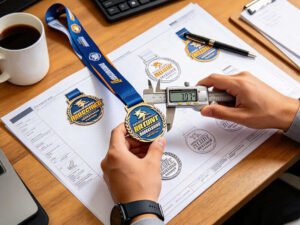
Every race director knows that heart-stopping moment when the finish chute suddenly backs up. Thousands of hours of training, municipal permits, volunteer recruitment, and course setup all lead to this final thirty-foot stretch of fenced road. Runners cross the timing mat gasping for air, legs burning, completely exhausted. Then, right when they expect their celebratory medal, they hit a complete wall of stopped people. Runners bump into each other, volunteers fumble with tape on cardboard boxes, and the joyful finish line turns into a dangerous crowd crush.
Global event organizers like the Abbott World Marathon Majors treat the finish chute as an engineered traffic system. A gorgeous, heavy custom medal handed over in a chaotic, jammed chute loses its magic instantly. Worse yet, chute gridlock obscures official timing cameras, creates medical hazards for dehydrated runners, and leads to careless volunteers handing the wrong medals to the wrong athletes. You do not need expensive software or a massive staff to run a smooth finish chute. By unbagging medals in advance, designing wide deceleration zones, color-coding multi-distance lanes, and training volunteers to drape awards with personal care, you can create a seamless finish line that runners rave about for years. While finish-line execution is the climax of your race, it represents the final stage of our complete race medal operations and sourcing framework.
Innholdsfortegnelse
Master Chute Operations Matrix: Flow, Zones, and Roles
Think of the finish chute as a one-way highway. When runners cross the timing mats, they arrive at different speeds. Some sprint across the line at maximum effort, while others jog slowly or walk with family members. If you place a table directly in front of them, high-speed traffic collides with stopped traffic. The secret to chute mastery is designing distinct zones that manage runner momentum automatically.
Review the comprehensive matrix below to understand the physical layout, volunteer duties, and equipment required for each zone of a professional finish chute.
| Operational Chute Zone | Physical Distance from Mat | Primary Runner Activity | Volunteer Staffing Focus | Critical Bottleneck Hazard |
|---|---|---|---|---|
| Deceleration Zone | 0 to 30 Feet Post-Timing Mat | Slowing down, catching breath | Medical spotters only; no tables | Athletes stopping dead on timing mats |
| Primary Handoff Zone | 30 to 75 Feet Post-Timing Mat | Receiving finisher medals | Staggered draping marshals | Volunteers fumbling with packaging |
| Rear Supply Corridor | Behind medal banquet tables | None (Restricted supply alley) | Hauling cartons from warehouse pallets | Stockers blocking runner flow in chute |
| Downstream Photo Zone | 75 to 105 Feet Post-Timing Mat | Taking official finisher photos | Photo marshals pulling runners forward | Athletes stopping immediately at tables |
| Recovery & Exit Funnel | 105 to 160 Feet Post-Timing Mat | Grabbing water and post-race food | Hydration and snack volunteers | Crowd lingering at the chute exit |
By spreading these operational stations across more than one hundred feet, you keep runners moving constantly. Each athlete receives personal attention without causing a dangerous pile-up behind them.
Pre-Race Unpacking and Staging: The T-24 Hour Polybag Rule
When medals arrive from overseas factories, every single award is sealed inside an individual clear polybag. Manufacturers do this for good reason: the plastic prevents electroplated metal from rubbing together and scratching during ocean cargo transit. But leaving medals inside those plastic bags on race morning is the single fastest way to cause a finish-line disaster.
Consider the math of a finish line. During peak arrival waves, two to four runners cross the timing mat every single second. If a volunteer has to pick up a medal, find the adhesive flap, peel open the plastic sleeve, and untangle the ribbon, that process takes at least six seconds. Within three minutes, your volunteers are hopelessly behind, and hundreds of runners are backed up across the timing line.
Professional race directors follow the T-24 Hour Polybag Rule:
- Unbag Everything in Advance: Gather a dedicated volunteer crew the day before the race to strip every medal out of its plastic sleeve. Discard or recycle the plastic wrappers off-site.
- Stage on Rolling Garment Racks: Hang unbagged medals by their ribbons on portable clothes racks in neat bundles of twenty-five. On race morning, volunteers simply roll the racks directly into the chute.
- Shingle on Tables if Using Banquet Tables: If using folding tables, lay medals flat in overlapping shingles with the medallions facing forward and ribbons extended backward. Volunteers can scoop up a medal in half a second.
- Audit Cartons Across Batches: While unpacking, open boxes from different sections of the pallet. Verify that jump rings are closed tight, ribbon seams are stitched securely, and plating finishes match your approved sample.
Removing the plastic wrappers before race day eliminates finish-line fumbling, prevents plastic litter from blowing across parks, and keeps your volunteers calm and smiling.
Chute Geometry: Designing Flow, Deceleration, and Buffer Zones
The physical shape of your finish chute dictates how runners behave. When runners sprint across the finish line, their vision narrows and their adrenaline surges. If they see a barrier or a table immediately in front of them, they stop dead in their tracks. That sudden stop causes a chain-reaction collision with the runners sprinting directly behind them.
To prevent collisions, enforce the thirty-foot clear zone. Do not place tables, water cups, or medal volunteers within the first thirty feet past the timing mats. This open buffer gives athletes the space they need to decelerate naturally from a hard sprint down to a walking pace. Position your medical spotters along the perimeter of this zone to gently guide dizzy or stumbling runners toward medical tents before they reach the crowds.
Once runners slow down, guide them into a wide handoff zone. Narrow, single-file chutes jam easily. Make your medal zone twelve to sixteen feet wide, and position volunteers in a staggered zigzag pattern along both sides of the corridor. When volunteers are staggered, runners naturally spread across the width of the chute. Volunteers can step forward to drape an award, take a step back, and let the next runner pass smoothly.
Use the downstream pull to keep athletes walking. The moment an athlete receives a heavy metal medal, their natural instinct is to stop walking, look down at the medallion, and pull out their phone. If they stop beside the medal tables, they block the volunteers. Place your official finish-line photo backdrops and sponsor step-and-repeat banners twenty feet past the medal tables. The bright backdrops act as a visual magnet, drawing runners forward and keeping the medal tables wide open.
Multi-Distance Chute Architecture: Color-Coding 5K, 10K, and Half Marathons
Running festivals that feature multiple race distances on the same morning face a unique logistical challenge. If a five-kilometer fun runner crosses the line beside a half-marathoner, volunteers can easily get confused. In a noisy, crowded chute, volunteers cannot stop to read fine metal lettering stamped on the back of each medal. Handing an expensive half-marathon medal to a 5K runner leaves you short on medals for the runners who trained for months.
To eliminate confusion, use the tri-color visual synchronization system. Align three visual touchpoints across your event supplies:
- The Race Bib: Print a prominent, bold color bar across the top of each runner’s bib number.
- The Neck Ribbon: Order your full-color dye-sublimated ribbons with background colors that match the bib bar exactly.
- The Overhead Chute Banners: Hang large, color-coded teardrop flags and signs above the matching medal tables.
When an athlete approaches, volunteers do not look at the metal medallion. They look at the runner’s bib color, glance down at the matching ribbon on their table, and make the handoff in half a second.
| Event Distance Category | Bib Header Color Code | Matching Ribbon Colorway | Chute Lane Location | Visual Queue for Volunteers |
|---|---|---|---|---|
| Halvmaraton (13,1 miles) | Deep Royal Navy Blue | Royal Navy Blue Sublimated Strap | Far-Left Chute Corridor | Large 3.5-inch medal with blue neckband |
| 10K Road konkurranse | Lys Crimson rød | Crimson Red Sublimated Strap | Center Chute Corridor | Mid-sized 3.0-inch medal with red neckband |
| 5K Community Run/Walk | High-Visibility Kelly Green | Kelly Green Sublimated Strap | Far-Right Chute Corridor | Compact 2.5-inch medal with green neckband |
| Barn’ 1-Mile Fun Run | Rainbow Multi-Color | Rainbow Striped Ribbon | Dedicated Youth Side-Chute | Silicone or mini medal with rainbow neckband |
For large events, split the finish chute into parallel physical lanes using bike-rack barricades. Place senior chute marshals twenty feet before the split to direct blue bibs to the left and green bibs to the right, keeping runner traffic organized before they reach the awards.
Volunteer Staffing, Command Roles, and Restocking Logistics
Volunteer coordination can make or break your finish chute. A common mistake is assigning ten volunteers to a table without specific roles. In the confusion, everyone tries to hand out medals, no one unboxes fresh cartons, and the table suddenly runs completely empty. Volunteers freeze, runners stop walking, and a bottleneck forms instantly.
Every finish chute needs three distinct, dedicated volunteer roles:
- Front Draping Marshals: These volunteers stand in the active corridor. Their only job is to greet runners, make eye contact, smile, and place ribbons over heads. They never turn their backs on the runners, and they never leave their posts to fetch supplies.
- Rear Table Restockers: These volunteers work in a private four-foot supply alley behind the tables. They open cartons, lift pre-staged medal bundles, and place fresh awards on the tables from behind. They ensure that tables never drop below twenty-five percent capacity.
- Chute Wave Directors: Stationed at the entrance of the handoff zone, these marshals monitor incoming crowd density. If one side of the chute gets crowded, they verbally guide runners toward open volunteers on the other side.
| Total Event Field Size | Peak Finishers per Minute | Draping Marshals Needed | Rear Restockers Needed | Chute Wave Directors | Total Chute Staff Required |
|---|---|---|---|---|---|
| 250 Runners (Local 5K) | 10 to 15 runners/min | 4 volunteers (2 per side) | 2 volunteers | 1 coordinator | 7 volunteers |
| 750 Runners (Mid-Sized 10K) | 35 to 50 runners/min | 8 volunteers (4 per side) | 4 volunteers | 2 coordinators | 14 volunteers |
| 2,000 Runners (Half-Marathon) | 90 to 120 runners/min | 16 volunteers (Staggered) | 8 volunteers | 4 coordinators | 28 volunteers |
| 5,000+ Runners (Major Festival) | 200+ runners/min | 32 volunteers (Dual chutes) | 16 volunteers | 8 coordinators | 56 volunteers |
Enforce the rear supply alley rule. Restockers must never carry cardboard boxes across the path of oncoming runners. Setting up banquet tables four feet away from the outer perimeter fencing creates a clear private corridor for hauling cartons, keeping heavy lifting away from exhausted participants.
The Draping Ritual: Turning a Handoff into an Unforgettable Celebration
Crossing a finish line represents months of sacrifice, early morning training runs, and pushing through physical pain. When a volunteer places a medal around a runner’s neck, that moment validates every mile of training. It is an emotional coronation, not a grocery store checkout line.
Train your volunteers on proper presentation etiquette before the race starts:
- Use the Two-Handed Drape: Instruct volunteers to hold the fabric ribbon wide open with both hands, step forward toward the runner, and gently lower the ribbon over their head. Be mindful of running hats, sunglasses, and large headphones so you do not knock them off.
- Make Direct Eye Contact: Looking runners directly in the eyes and saying, “Congratulations, you did it!” eller “Amazing finish today!” turns a piece of metal into an unforgettable personal memory.
- Accommodate Adaptive and Youth Athletes: Train volunteers to bend at the knees to drape medals at eye level for wheelchair athletes, handcyclists, and young children.
- Never Shove Medals into Hands: Handing a medal over like a flyer cheapens the award. Even if the chute gets busy, placing the ribbon over the head honors the athlete’s effort.
Consider inviting local youth track clubs, student ambassadors, or community leaders to serve as draping marshals. For milestone race editions, having city mayors or local sports legends present medals adds extra prestige that runners cherish for a lifetime.
Weather Defense and Environmental Protection: Rain, Mud, and Wind
Mother Nature does not always cooperate on race morning. Heavy downpours, strong winds, and damp ground can quickly turn an organized finish chute into a soggy mess. Outdoor race directors must plan for bad weather long before the storm hits.
The biggest threat in heavy rain is collapsing cardboard. When cardboard shipping boxes sit on wet grass or rainy asphalt, water wicks up through the bottom layers. Within an hour, the cardboard turns into mush, the boxes split open, and hundreds of medals tumble into the mud. Always store reserve cartons on wooden pallets, plastic risers, or folding tables elevated at least four inches off the ground. Cover all reserve stock with heavy waterproof tarps.
High winds present a different challenge: the ribbon tangle disaster. When wind speeds climb above fifteen miles per hour, medals hanging from clothes racks whip around in the air. The long fabric ribbons twist together into tight knots that take volunteers minutes to untangle. If windy conditions hit your race, abandon hanging racks immediately. Lay the medals flat on banquet tables in overlapping shingles with the fabric straps tucked neatly underneath the heavy metal medallions to hold them down.
Finally, ensure your medal supplier tested ribbons for wet-rub colorfastness. Deep trail endurance events covered by publications like iRunFar expose gear to severe mud and rain. If a manufacturer uses cheap textile dyes, soaking-wet ribbons will bleed chemical colors onto runners’ expensive shirts. High-grade heat-sublimated polyester locks dyes permanently inside the fibers, guaranteeing that torrential rain and sweat never ruin a finisher’s race-day jacket.
Emergency Contingencies: Defective Hardware and Timing Disputes
Even in the most carefully planned events, unexpected emergencies occur. A volunteer pulls on a ribbon too hard and snaps a jump ring. A runner’s timing chip fails to trigger the finish mat. Or an unexpected surge of race-day walk-up registrations leaves you short on medals in the final thirty minutes. Having a pre-planned emergency protocol keeps your finish chute calm.
Set up a defective hardware quick-swap station. Across a production run of several thousand medals, a factory defect rate of under one percent is normal. A jump ring might have a microscopic gap, or a ribbon seam might have missed a stitch. Keep a replacement tray holding ten to fifteen pristine medals directly behind each table. If a volunteer notices a twisted ribbon or loose ring, they instantly swap the medal from the tray without holding up the runner line.
| Emergency Chute Incident | Immediate Finish Impact | On-Site Rapid Response Action | Long-Term Resolution Protocol |
|---|---|---|---|
| Ribbon Seam Snaps During Drape | Medal falls; volunteer hesitates | Swap immediately from rear replacement tray | Log defect; report lot number to medal factory |
| 5K Runners Enter Half-Marathon Chute | Wrong medal handed out | Chute wave marshal gently redirects runner | Enforce bib color checks at entrance of lane |
| Medal Table Drops Below 20% | Restock lag; volunteers slow down | Radio rear supply alley to haul two cartons | Assign two extra volunteers as dedicated stockers |
| Timing Chip Fails to Read at Mat | Runner panics fearing no award | Hand medal; escort runner to timing tent | Timer verifies manual backup camera footage |
| Complete Medal Shortage Occurs | Runners cross with no medals left | Deploy logging team; take bibs and addresses | Order emergency factory batch; mail awards |
If a complete medal shortage happens, never let volunteers hide or get defensive. Train chute captains to step forward with total empathy: “We are incredibly proud of your race today. Our field grew beyond all expectations, but your medal is 100 percent guaranteed. We are taking down your details right now, and a brand-new medal will be mailed to your home with our compliments.” Use tablets or clipboards to record bib numbers, full names, and verified mailing addresses so replacements can be shipped immediately.
Frequently Asked Questions About Finish-Line Chute Operations
1. How far past the timing mat should medal tables be placed?
Medal tables should be positioned 30 to 40 feet past the timing mats. This gives athletes adequate space to decelerate safely from a sprint down to a walking pace without crashing into volunteers or blocking the timing line.
2. Why should medals be unpacked from plastic bags before race day?
Peeling adhesive tape off plastic bags takes several seconds per medal. During peak arrival waves, volunteers cannot keep up, causing severe chute bottlenecks. Unbagging medals 24 to 48 hours in advance ensures awards can be handed out in half a second.
3. How do you prevent volunteers from handing out the wrong medals in multi-distance races?
Synchronize colors across three touchpoints: race bib headers, medal neck ribbons, and overhead chute banners. When bib colors match ribbon colors, volunteers can spot the right award instantly without reading small text.
4. Should medals be placed around the neck or handed to runners?
Medals should always be draped over the head using both hands, accompanied by direct eye contact and warm congratulations. This ceremonial gesture validates the runner’s hard work and turns the handoff into an emotional celebration.
5. Where should the official race photo backdrop be positioned?
Position photo backdrops at least 20 feet past the medal tables. The bright backdrop acts as a visual magnet that pulls runners forward, clearing the medal handoff tables and preventing crowd congestion.
6. What should you do with leftover medals after the race is over?
Count all remaining medals to calculate your actual drop-out rate. If your medals are date-free, pack them in clean cartons to reuse next season. If dated, donate them to children’s hospitals or local school field days.
7. How many volunteers are needed to hand out medals at a 1,000-person race?
A 1,000-person race needs about 14 to 18 volunteers in the chute: 8 to 10 front-line draping marshals, 4 to 6 rear table restockers, and 2 chute wave directors to guide runner traffic smoothly.
8. Where should age-group trophies and sponsor awards be distributed?
Never hand out age-group trophies or sponsor plaques in the finish chute. Quarantine all competitive and sponsor awards at a dedicated awards tent in the festival area to keep the main runner exit clear.
Perfecting the Final Thirty Seconds of Race Day
Every medal you hand out represents countless early mornings, blistered feet, and personal determination. When runners cross your finish line, those final thirty seconds in the chute are what they remember most. Designing a smooth, friction-free finish chute honors their effort, keeps athletes safe, and ensures your event runs like a world-class operation.
Operational mastery comes down to smart preparation. Stripping plastic polybags early, staging awards on rolling racks, enforcing deceleration zones, and synchronizing colors across bibs and ribbons turns potential chaos into a joyful, seamless celebration. When your finish chute flows smoothly, runners leave with big smiles, sponsors get incredible visibility, and your event earns a glowing reputation.
If you are planning your upcoming race calendar and want experienced guidance on medal sizing, durable ribbon stitching, or packaging options that speed up race-day staging, our team at The Cheap Lapel Pins Factory is here to help. We provide expert advice, free digital design proofs, and dependable manufacturing to ensure your race medals look stunning and arrive ready for a flawless finish line.
Ready to Design Medals for a Flawless Finish Line?
Share your race distances, runner counts, and design ideas with us today. Our design team will prepare a complimentary digital proof and an all-inclusive quote to make your race-day awards completely unforgettable.